Red Valley Peru: Hiking Guide and Tour Options from Cusco
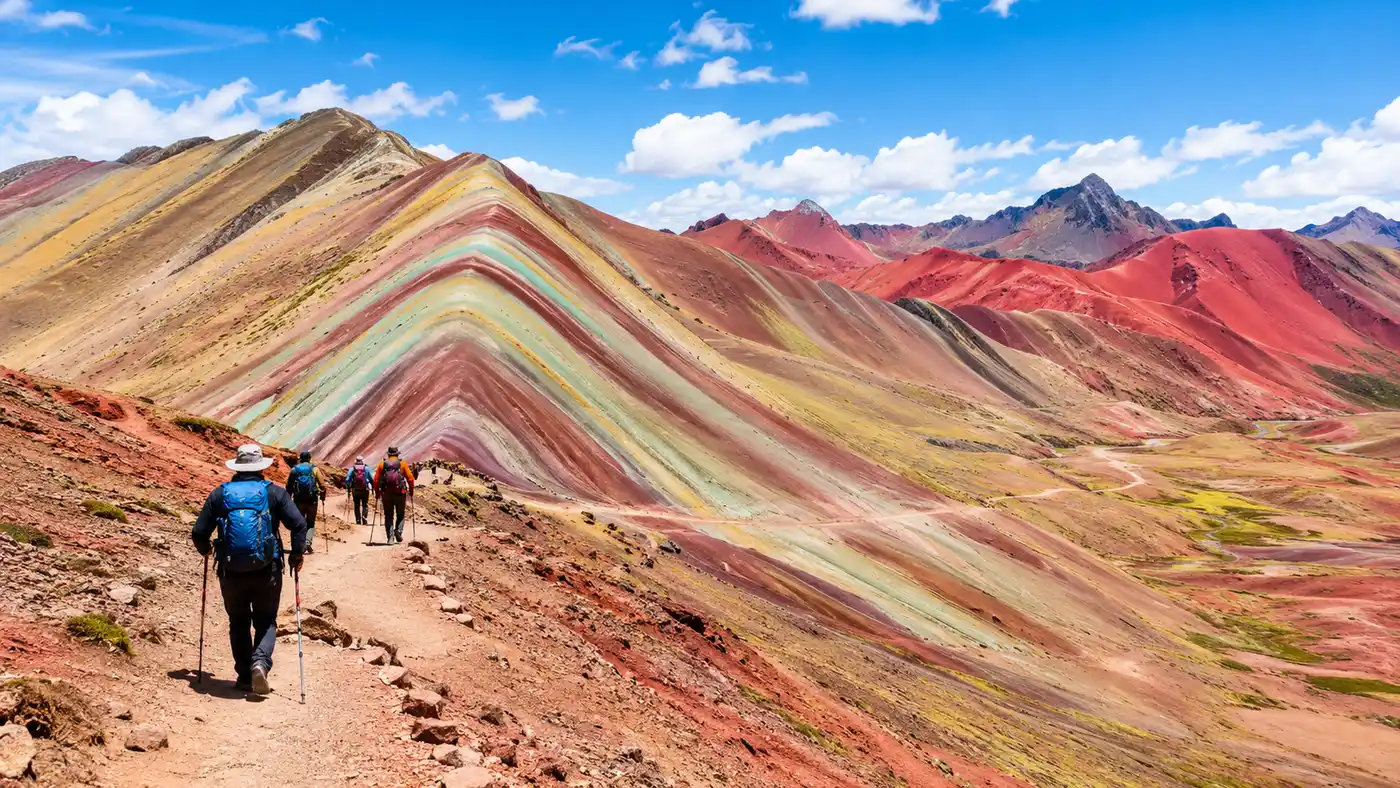
Most travelers dragging themselves up the steep ridge toward Vinicunca have no idea that something arguably better sits twenty minutes beyond the main viewpoint. You stand on the windy pass at 5,038 meters, surrounded by hundreds of people carrying selfie sticks, and look behind you. The crowds vanish. In their place stretches a silent, rust-colored canyon that looks less like the Andes and more like the floor of Mars. Visiting red valley peru was an afterthought for me on my first trip south of Cusco, but it ended up being the thing I remembered most vividly months later.
Known locally as Valle Rojo, this surreal expanse of iron-rich sandstone sits directly behind the famous striped ridge. While social media made the neighboring peak an international bucket-list item, the surrounding rainbow valley peru landscape remains shockingly peaceful by comparison. This guide walks you through how to see it, whether you should walk the back ridge or take an alternative vehicle route, what the altitude actually feels like, and how to organize your day so you do not freeze or run out of breath halfway up.
Book your rainbow mountain tour experience:
What Exactly Is the Red Mountain Peru Landscape?
The entire Pitumarca district is a geological oddity. Millions of years ago, marine sediments, sandstone, and clay layers shifted as the tectonic plates slammed together to form the Andes. Weathering did the rest. When iron oxide interacts with mountain air, oxygen, and meltwater over millennia, it rusts. That is the whole secret behind the fiery crimson hills of red mountain peru. It is pure rust on a colossal scale, broken up by patches of bright green moss and gray limestone gravel.
Photos online often look fake. Some travel influencers crank up the saturation until the hills look like strawberry candy, which sets people up for strange expectations. In reality, the tones are earthy, deep, and dramatic. On a bright morning under harsh Andean sunlight, the slopes gleam like freshly turned terracotta bricks. When clouds roll in from the Ausangate massif, the valley darkens into a moody maroon shadow. It looks raw, quiet, and ancient.
Locals from the nearby community of Chillihuani manage the land. They pasture alpacas across the lower flats where thin streams cut through the red dirt. You will smell woodsmoke from small stone huts long before you see them. Honestly, the quiet alone makes the detour worthwhile. Vinicunca can feel like a crowded theme park by 10:00 AM, but stepping into the red valley cusco sector feels like slipping through an unlocked back door into genuine wilderness.
Hiking the Rainbow Mountain and Red Valley Tour Loop
You do not need an entirely separate day trip to see both valleys. Almost every standard day trip can become a combined rainbow mountain and red valley tour if you manage your timing well on the mountain. After grinding up the trail to the classic Vinicunca viewpoint, you will see a trail branching off to the left, heading northeast along the ridge.
That trail takes you around the back of the mountain toward the Mirador Valle Rojo. It adds roughly 2.5 kilometers of walking, depending on whether you take the upper ridge lookout or follow the lower path down into the valley basin. The trail hugs the mountainside, rolling gently over loose shale and red dirt before climbing a short, steep spur to a cliffside viewing platform.
Pro tip: Tell your group guide in the morning that you plan to exit via the valley loop instead of walking back down the main trail. Most guides will let you, provided you can hike at a steady pace and meet the minibus by 1:30 PM.
Walking the loop back down to the parking lot is actually easier on your knees than descending the gravel highway of Vinicunca. The dirt path down through the canyon floor is softer, much quieter, and winds past grazing llamas. You end up at the lower parking area near Japura or Chillihuani, right where the tour vans wait. It turns an out-and-back slog into a circular trek.
| Route Option | Total Distance | Typical Hiking Time | Max Elevation | Difficulty |
|---|---|---|---|---|
| Vinicunca Out & Back | 7.0 km | 2.5 to 3 hours | 5,038 m | Moderate-Strenuous |
| Classic Red Valley Loop | 8.8 km | 3.5 to 4.5 hours | 5,055 m | Strenuous |
| ATV Combo Route | 3.5 km on foot | 1.5 to 2 hours hiking | 5,038 m | Easy-Moderate |
| Deep Valley Trek to Pitumarca | 14.0 km | 5 to 6 hours | 5,055 m | Demanding |
Elevation, Trail Conditions, and Physical Toll
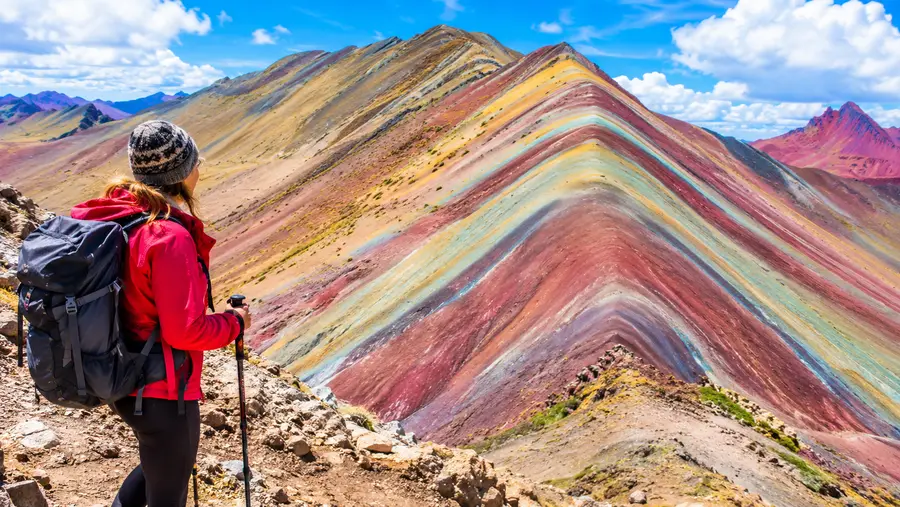
Let us be clear about the physical effort. You are operating above 5,000 meters. At this altitude, air pressure drops significantly, and every breath gives your lungs about half the oxygen you get at sea level. The climb feels hard. Your legs will feel like wet cement, your temples might throb lightly, and even taking three quick paces uphill forces you to stop and lean on your trekking poles. Preparing for the Rainbow Mountain hike elevation is not something you leave to chance.
The trail itself is not technical. You do not need climbing ropes or mountaineering background. It is a wide dirt footpath, though it turns into thick, clay mud if it rains or snows overnight. In the dry season between May and September, wind whips fine red dust into your eyes and teeth. Wear sunglasses, even if it looks overcast, because the glare from the mineral dirt and high-altitude sky strains your vision quickly.
Note: Horses are readily available on the main route up to the classic ridge, but horse handlers are generally not permitted to take animals along the narrow upper path into the red basin. You must walk that section under your own power.
I watched several hikers try to rush this section because they were excited by the red desert peru views. That is a mistake. Take slow, rhythmic steps, breathe through your nose, and sip water continuously. The moment you push your pace at 16,500 feet, nausea will hit you out of nowhere.
Book your rainbow mountain tour experience:
Rainbow Mountain and Red Valley ATV Tour Options
If walking uphill at extreme elevation sounds miserable, you have alternatives. The rainbow mountain and red valley atv tour has exploded in popularity over the last two years, particularly among travelers short on time or acclimatization days. Instead of taking the standard bus route through Cusipata, these quad bike tours typically approach from the Pitumarca side along a dirt service road.
You drive the machines for roughly 45 to 60 minutes across flat dirt tracks and gentle gravel ascents before parking at an altitude near 4,850 meters. From that upper parking spot, the hike to the viewpoints is cut down to about 25 to 35 minutes of uphill walking. If you enjoy motorized adventure, exploring Rainbow Mountain by ATV saves your lungs from the three-hour uphill grind.
There are trade-offs to keep in mind:
- Engine noise and dust: You trade quiet mountain solitude for the rumble of 250cc engines and plumes of roadside dirt.
- Cold hands: Gripping handlebars at 7:00 AM when the temperature sits near freezing will turn your fingers completely numb without thermal ski gloves.
- Limited route flexibility: Most quad bike guides run on rigid group schedules, meaning you get slightly less time to sit peacefully at the far viewpoint.
- Physical savings: You skip the exhausting initial climb, leaving plenty of energy to explore the red ridge without collapsing.
It costs more than a group trek. A budget bus tour might run $25 to $35 per person, while an ATV excursion usually settles between $80 and $115 depending on whether you share a quad or drive solo.
Planning Your Day: Timing, Costs, and Packing Essentials
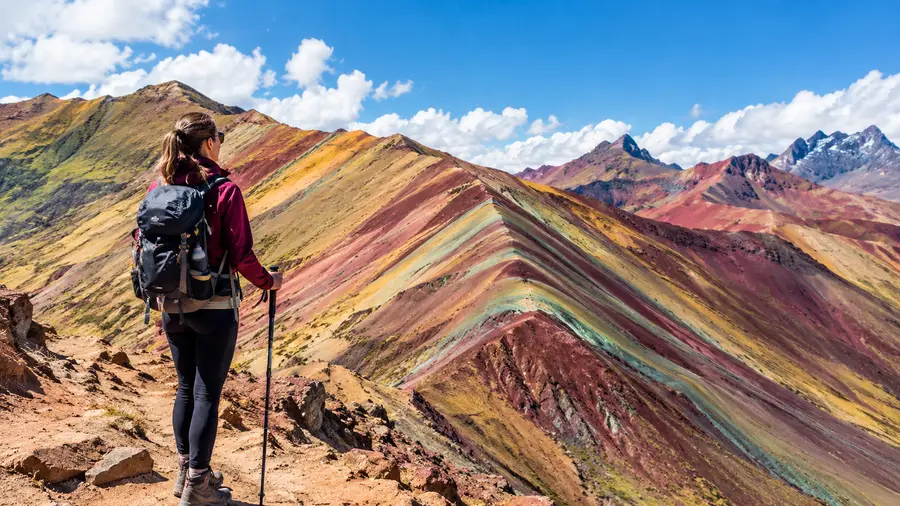
Timing your run from Cusco determines whether you experience serenity or a human traffic jam. Standard group vans pull out of the historic center between 3:30 AM and 4:15 AM. That puts you at the trailhead around 7:00 AM, following a quick breakfast stop in Cusipata or Pitumarca. You reach the ridges right around the same time as forty other vans. If your budget allows, booking a private driver who leaves Cusco at 2:45 AM or waiting for a midday departure lets you see the red landscape with barely anyone around.
Money matters are simple up here, but cash is king. There are no card readers or cell signals at the checkpoint:
- Community entry fee: Vinicunca charges an entrance fee of 25 soles for foreign travelers, but the local village managing the red sector charges an extra 20 soles at a wooden gate along the trail. Keep twenty-soles bills clean and dry in your pocket.
- Bathroom charges: Expect to pay 2 soles at the trailhead outhouses, which are basic drop toilets with toilet paper handed out at the door.
- Snacks and hydration: Buy boiled water, dried fruit, and snacks in Cusco the evening prior. Trailside stalls sell Coca-Cola and Gatorade for around 8 to 10 soles, roughly double city prices.
The weather changes violently within thirty minutes. You can start walking under clear blue skies in a t-shirt and end up getting pelted by hail while wind howls across the pass. Dressing in three distinct layers is non-negotiable. Bring a thermal base layer, an insulating fleece or packable down jacket, and a wind-blocking waterproof outer shell. Add a woolen beanie, warm gloves, and high-SPF mineral sunscreen.
Frequently Asked Questions about red valley peru
Is the hike to Red Valley Peru harder than Vinicunca?
The trail itself is relatively gentle, but you are already fatigued from reaching Vinicunca. The extra climb to the red viewpoint gains another 50 meters of altitude, which feels strenuous on tired lungs, though the descent along the valley floor is significantly easier on joints than the main gravel road.
Can I visit the valley on my own without an organized tour?
Yes, by hiring a private taxi from Cusco or taking early morning public buses to Checacupe and catching a local shared combi to Pitumarca. From there, you negotiate transport to the Japura trailhead. It requires strong Spanish and extra logistics, so most travelers find private tours simpler.
What is the best month to visit?
The dry winter season from May to September offers the highest chance of cloudless skies and vibrant colors. Between December and March, heavy rain and Andean snowstorms frequently cover the red sandstone in white slush, obscuring the views.
Is there a horse service available inside the red valley?
Local horse handlers operate along the main track up to the classic mountain pass, but they rarely go down into the red canyon trails because the paths are narrower and rocky. Plan on walking that section yourself.
Quick Reference
- Max Altitude: 5,055 meters (16,584 feet)
- Extra Entry Fee: 20 Peruvian Soles
- Extra Hiking Distance: 2 to 3 kilometers
- Best Season: May through September
Book your rainbow mountain tour experience:
Is It Worth It?
If you have already made the effort to drive three hours over bumpy dirt roads and crawl up past 5,000 meters, walking away without seeing the red canyon is a genuine mistake. Most visitors turn straight back down the mountain after snapping a quick photo at the main striped ridge, completely missing the most dramatic landscape in the region. Pay the extra twenty soles at the little wooden gate, take your time along the high ridge, and let your eyes adjust to an entire valley washed in deep crimson. It is quiet, strangely humbling, and easily the highlight of hiking south of Cusco.
Read more about rainbow mountain tour.